‹ Zurück
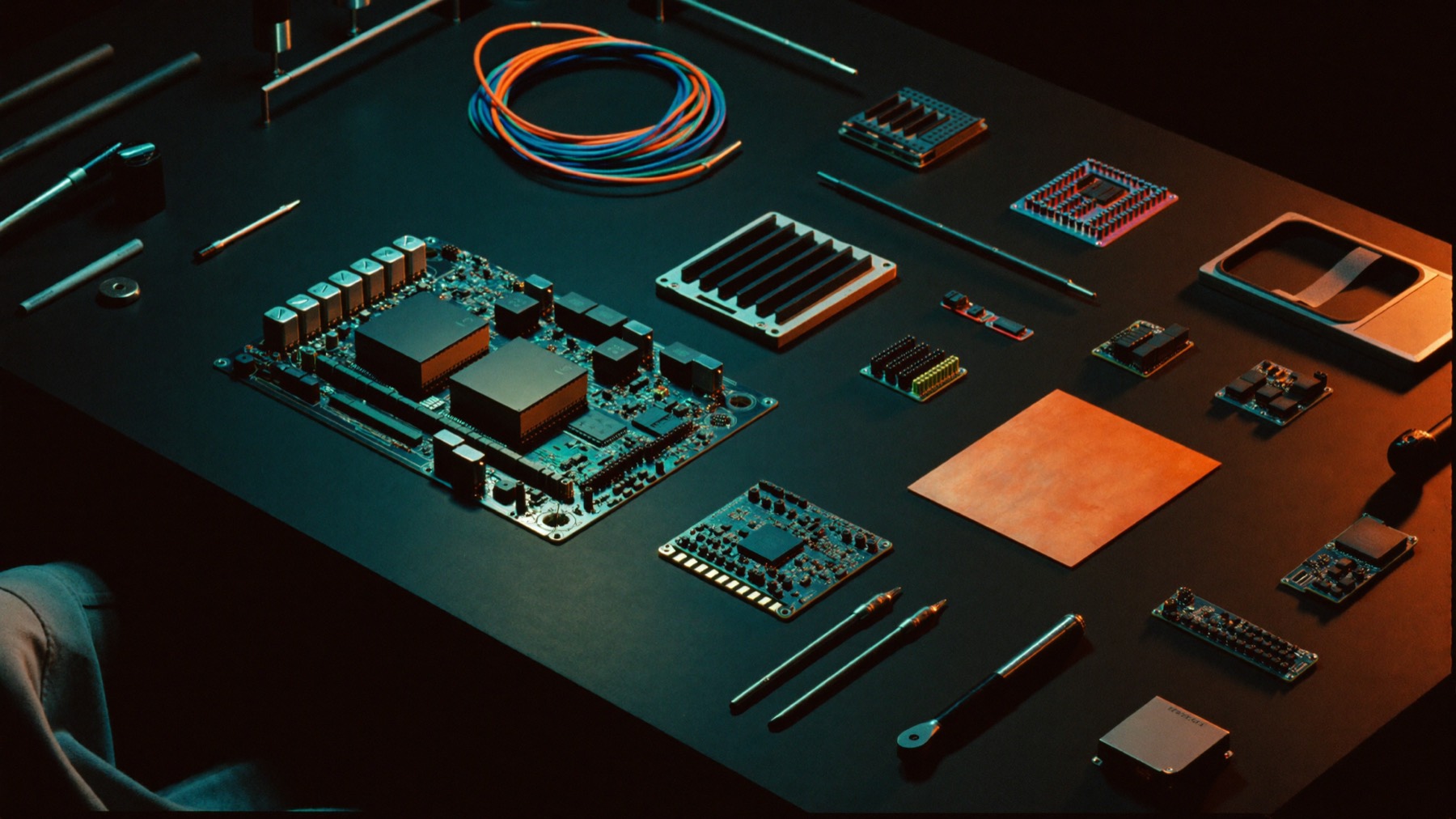
Das Bauverzeichnis
So wird ein KI-Rechenzentrum gebaut
Angenommen, Sie bauen einen Campus rund um NVIDIA-GPUs. Hier ist jede Komponente, die Sie damit einzukaufen beschlossen haben, wer sie tatsächlich herstellt und die Software, die Sie installieren, bevor das erste Token ausgegeben wird – jeder Name verlinkt auf seinen Datensatz.
Diese Seite von oben bis unten zu lesen bedeutet, einer realen Beschaffungskette zu folgen: Silizium → Boards → Racks → Kabel → Kühlung → Strom → Software → Modell. Dieselbe Spur funktioniert für jeden Beschleuniger – tauscht man die erste Stufe aus, ändert sich am Rest der Kette kaum etwas.
1 Die GPU selbst ist eine Lieferkette
„Eine NVIDIA-GPU" ist im Grunde ein Paket aus Komponenten aus fünf Ländern. NVIDIA übernimmt Design und Software; nahezu alles Physische wird von anderen gefertigt.
Logic-Dies (die Recheneinheit)
TSMC 4NP process
in Taiwan auf Maschinen gefertigt, die nur ASML bauen kann — ASML EUV
Ist TSMC die einzige Wahl? An der Spitze des Machbaren praktisch ja — jeder führende KI-Chip wird heute dort gefertigt. Die zwei aufholenden Alternativen: Samsung Foundry · Intel Foundry
Packaging (Die + Speicher verbunden)
TSMC CoWoS Amkor ASE
Der Schritt, der 2023–24 das weltweite GPU-Angebot rationierte
Platinenmontage
Foxconn Quanta
Die SXM-Module und Superchip-Boards werden von taiwanischen Herstellern gefertigt, nicht von NVIDIA
Vollständige Spezifikationsblätter: B200 · GB200 · oder die gesamte Lieferkette eines Chips über seine Datensatzseite nachverfolgen.
2 Server und Racks
GPUs werden in entwickelten Systemen geliefert. Im Blackwell-Maßstab ist das Rack selbst das Produkt: 18 Compute-Trays, 9 Switch-Trays, ein Kupfer-Backbone.
Das Rack-Scale-System
GB200 NVL72 HGX baseboards
~120 kW pro Rack – der Strombedarf von hundert Haushalten auf dem Platz eines Kleiderschranks
3 Die Verkabelung
Die Frage, die alle vergessen zu stellen. Drei Kabeltypen, drei Lieferanten-Ökosysteme – und auf Cluster-Ebene läuft die Kabelrechnung in die Hunderte von Millionen.
Einblick ins Rack: Kupfer
Amphenol TE Connectivity Credo
DAC- und aktiv-elektrische Kabel; allein die NVLink-Backbone des NVL72 umfasst ~5.000 Kupferkabel — über drei Kilometer pro Rack
Zwischen den Racks: Licht
800G optics Coherent Lumentum Fabrinet
steckbare Transceiver zu Hunderttausenden pro Cluster; Laser von Photonik-Herstellern, Montage größtenteils in Thailand
Das Glas selbst
Corning
Campus-Glasfasernetze erreichen heute Längen von Millionen Kilometern
Lernen: wie 100.000 GPUs zu einem Computer werden →
4 Kühlung — und warum sie die Landkarte bestimmt
Auf einen Blick
Auf dem Chip: Kühlplatten
Direct-to-chip CoolIT Boyd
Kupfer-Mikrokanalplatten, an jeden GPU, jede CPU und jeden Switch-ASIC geschraubt
Wärmeabfuhr
Rear-door HX Immersion Munters
Trockenkühler, Kühltürme oder Kältemaschinen außen; geschlossene Kreisläufe werden einmal befüllt und verbrauchen kaum Wasser
Das Standortsignal:
Kühlung ist der Grund, warum Rechenzentren historisch in der Nähe von Flüssen und Seen gebaut wurden (Verdunstungskühlung) – und warum die neue Generation geschlossener Kühlkreisläufe stattdessen günstigen Strom in trockenen Regionen ansteuern kann. Standortanalysten erkennen Campusse auf Karten genau an diesen Merkmalen: Wasserrechte, Hochspannungskorridore, Glasfasertrassen, kühle Klimazonen.
Lernen: wo Rechenzentren entstehen und warum →
Einblick in die Giganten: ein Problem, sechs Antworten
Alle oben Genannten verkaufen an alle unten Genannten — doch jeder große Anbieter integriert den Stack anders. Das sind die realen Konfigurationen, zusammengestellt aus denselben Datensätzen, die diese Datenbank insgesamt verwendet.
The vertical integrator
The only player integrated from self-designed silicon to frontier model — no NVIDIA required anywhere in Gemini's path.
Rechenleistung
TPU v7 Ironwood Trillium
Its own TPUs — Ironwood for the inference era, Trillium in volume — plus NVIDIA GPUs rented out to Cloud customers.
Fabric
TPU pods Optics
3D-torus inter-chip links reconfigured by in-house optical circuit switches; the Jupiter network carries the data center.
Racks & Systeme
TPU pods
Self-designed: the 9,216-chip pod, not the server, is the unit of hardware.
Kühlung
Direct-to-chip
Direct liquid cooling on TPU pods since 2018 — the earliest big liquid fleet.
Strom
Kairos fleet Nuclear
A giant renewables book, the first corporate SMR fleet order, and restart interest.
Software
JAX XLA
Linux + Borg orchestration underneath; JAX and XLA compile straight to TPU.
The alliance at NVIDIA scale
The biggest NVIDIA buyer builds 'AI factories' for its partner's models — with its own silicon waiting in the wings.
Rechenleistung
GB200 H100 Maia 100
Frontier NVIDIA fleets — GB200 today atop huge H100 estates — with in-house Maia 100 in supporting roles.
Fabric
InfiniBand
The world's largest InfiniBand deployments, flat networks spanning whole sites.
Software
DeepSpeed ONNX Runtime
Linux + Azure's stack; DeepSpeed for training scale; ONNX for deployment.
Modell & Standort
GPT-5 Fairwater Stargate
GPT-5 trains and serves on this estate; Stargate adds OpenAI's own campuses.
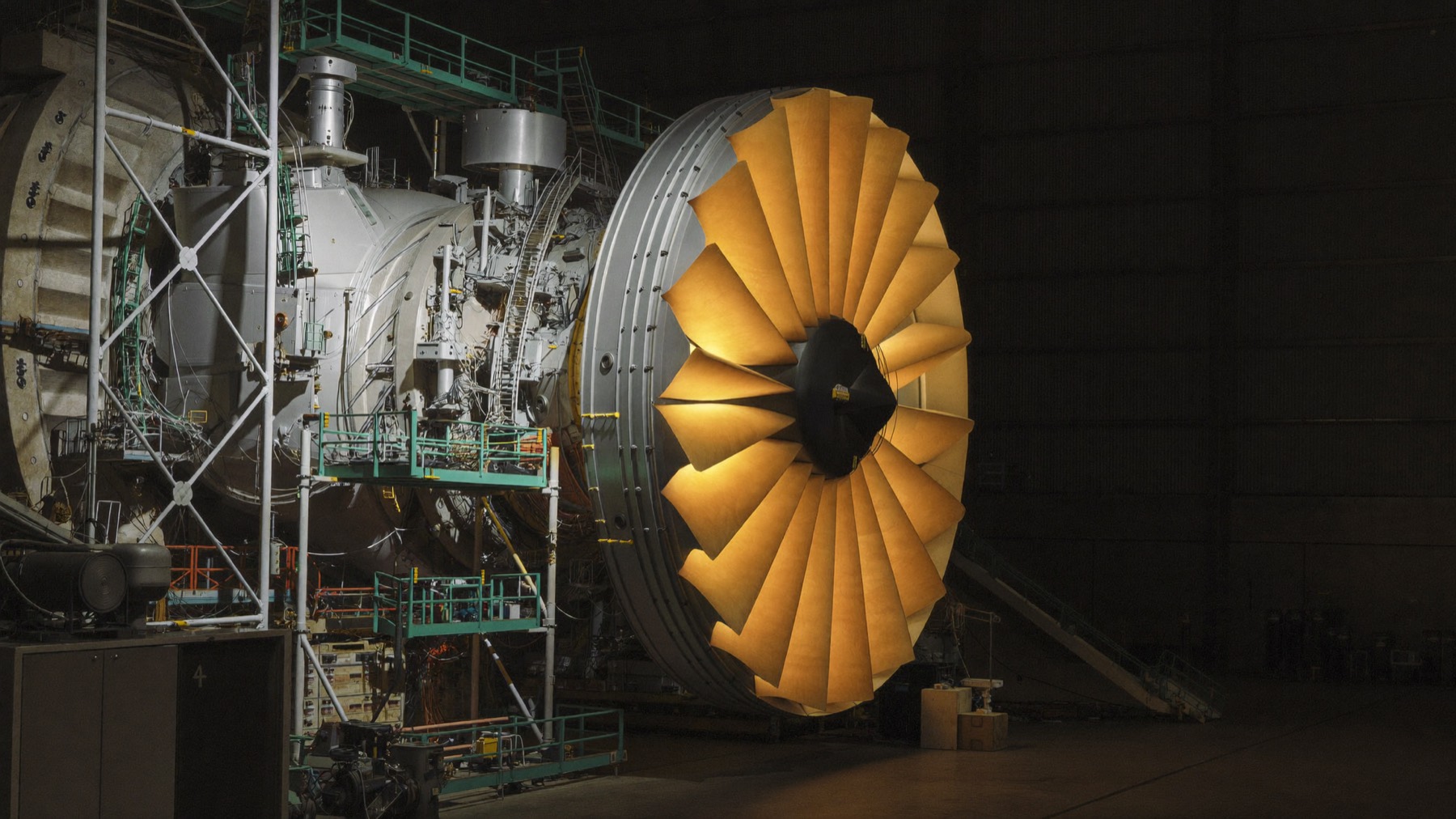
The speed record
The existence proof that a frontier cluster can be improvised in months — factory shell, gas turbines, batteries and all.
Rechenleistung
H100 H200
~100,000 H100s in 122 days, doubled since; GB200-class capacity at Colossus 2.
Fabric
Spectrum-X
The flagship Spectrum-X Ethernet deployment — NVIDIA networking without InfiniBand.
Racks & Systeme
Supermicro Dell
Supermicro and Dell liquid-cooled systems, delivered at sprint pace.
Kühlung
Direct-to-chip
Direct liquid throughout — the density made air a non-starter on day one.
Strom
Gas turbines Colossus
On-site gas turbines bridging the grid queue, Tesla Megapacks smoothing training spikes.
Software
CUDA
A lean in-house training stack on Linux and CUDA — small team, big machine.
Modell & Standort
Grok 4 Colossus
Grok 3 and 4 trained at Colossus; Grok ships inside X.
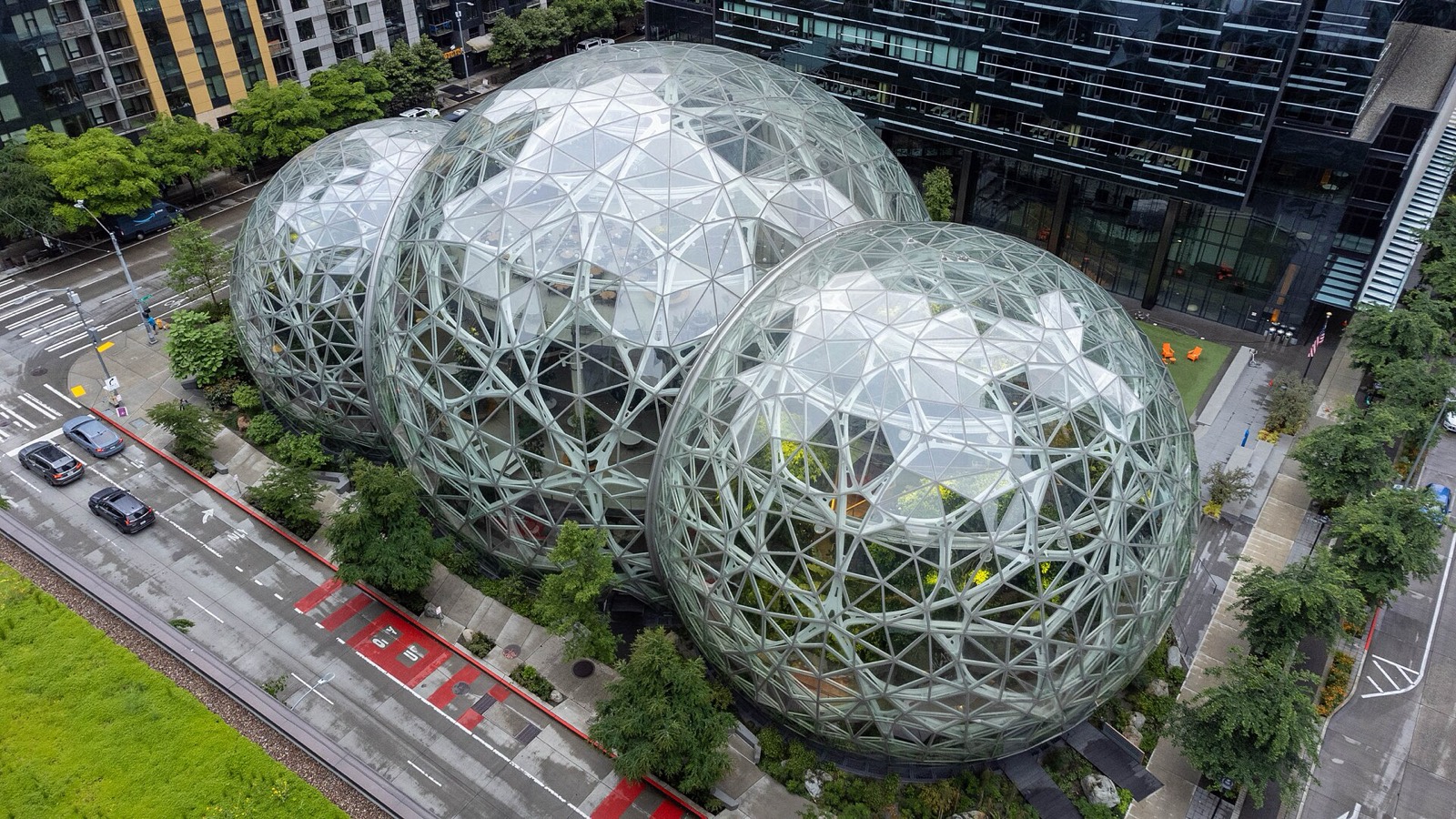
The custom-silicon bet
The clearest test of whether a hyperscaler's own chips can carry a frontier lab — half a million Trainiums and counting.
Rechenleistung
Trainium2 UltraServer
Trainium2 UltraServers at Project Rainier scale, beside NVIDIA fleets for customers.
Fabric
UltraServer
NeuronLink inside the UltraServer; AWS's own EFA networking and Nitro offload beyond it.
Racks & Systeme
Annapurna/AWS
Annapurna-designed, self-integrated — the cloud primitive as the building block.
Kühlung
Direct-to-chip
Liquid-and-air mix tuned per hall across the Rainier sites.
Strom
Susquehanna X-energy
Nuclear at Susquehanna, X-energy SMR backing, and the largest corporate renewables book.
Software
PyTorch vLLM
The Neuron SDK is the whole ballgame — porting the open stack to its own silicon.
Modell & Standort
Claude 4.5 Project Rainier
Claude trains at New Carlisle — and, uniquely, also runs on TPUs and GPUs elsewhere.
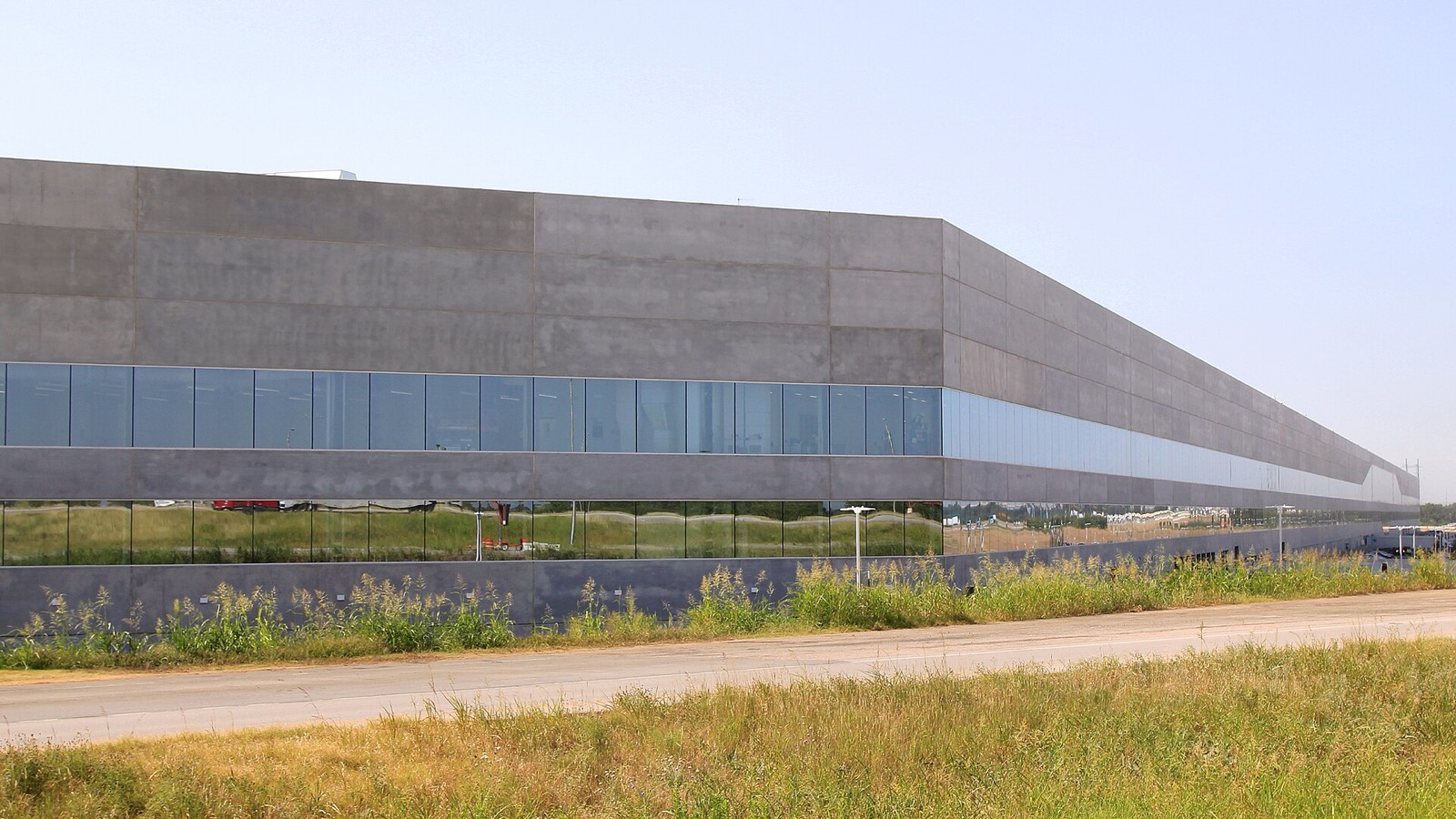
The embodied-AI factory
Trains on video from millions of cars, ships the result back to them — with its own batteries steadying its own cluster.
Rechenleistung
H100 Cortex
The ~50,000-GPU Cortex cluster at Giga Texas; Dojo wound down for AI5/AI6 chips.
Fabric
800G optics
Ethernet-fabric clusters sized for video-scale data ingest.
Racks & Systeme
Supermicro
Supermicro and Dell systems, plus purpose-built data-hall extensions of the factory.
Kühlung
Direct-to-chip
A dedicated liquid-cooling plant built alongside the cluster.
Strom
Gas turbines
Grid supply buffered by its own Megapacks — the manufacturer as its own customer.
Software
PyTorch
Vision-only training pipeline on PyTorch; models compile down to the car's FSD computer.
Modell & Standort
Tesla FSD Samsung
FSD v13+ ships over the air; AI5/AI6 silicon comes from Samsung and TSMC.
Challenger-Silicon, die Plattformgeneration 2026–27, photonische Interconnects, die Nuklearwelle und die Architekturwetten jenseits des Transformers – verfolgt mit Statusbezeichnungen auf der Watchlist.