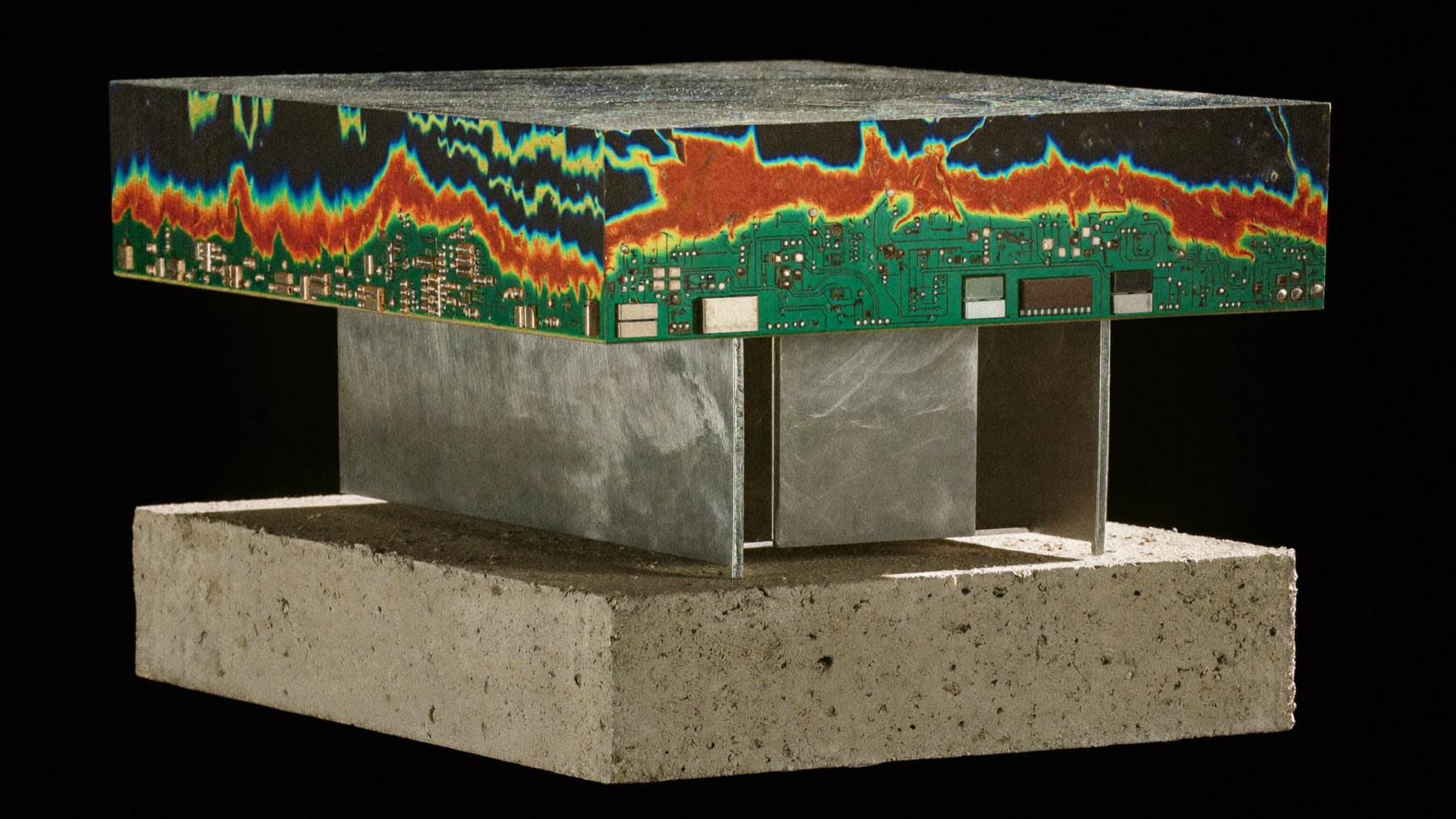
Da eletricidade à inteligência
Sete camadas, cada uma dependendo da anterior. Cada camada abre uma seção do banco de dados; cada exemplo é um registro que você pode abrir.
Electricity is the first input of AI. Gigawatt-scale campuses are signing nuclear offtakes, building gas turbines behind the meter, and waiting years in interconnection queues.
The buildings: shells, substations, chillers and halls engineered around rack densities that have jumped from ~10 kW to 120+ kW per rack.
Accelerators ship inside engineered systems — 8-GPU baseboards, rack-scale NVLink domains, InfiniBand and Ethernet fabrics, direct-to-chip liquid loops.
The chips themselves: leading-edge logic from a handful of foundries, stacked HBM memory, and advanced packaging that has become its own bottleneck.
The layer that turns racks into computers: kernels, compilers, frameworks, schedulers and serving engines — and the moats they create.
What the machines are for: frontier and open-weights models, from GPT and Claude and Gemini to DeepSeek, Llama and Qwen.
Where AI meets users: chat assistants, coding agents, creative tools, scientific systems and robots.
Um chip, stack completa: o exemplo prático do B200
O motor de relações em ação — todas as ligações armazenadas de um registo, cada extremidade clicável. Todas as páginas de registo funcionam desta forma.
Os relacionamentos são bidirecionais: o que um registro lista como "fabricado por", o outro lista como "fabrica".