AI campuses do not land randomly. Every siting decision is a compromise between five resources, and once you know them you can look at a map and predict where the next campus goes — the way analysts and land brokers already do.
1. Power first — everything else is negotiable
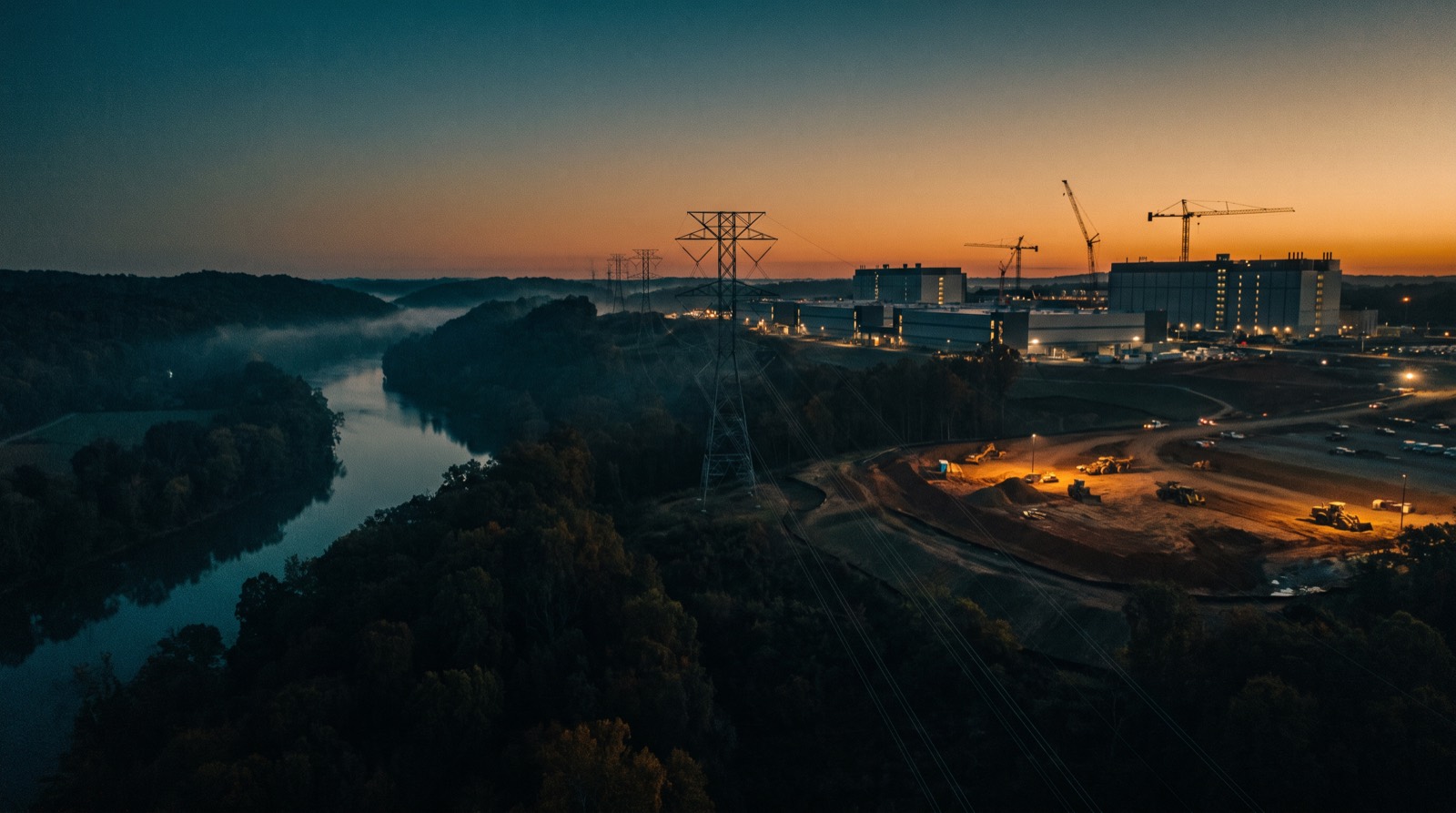
A gigawatt campus needs transmission-scale electricity, so sites cluster where the grid is strong and the interconnection queue is short: next to existing substations, along high-voltage corridors, at retired coal or industrial sites whose grid connection outlives them (Homer City is the template), or at the fence line of a power plant itself (Susquehanna). Training doesn't care about latency to users, which freed the industry from metro areas — that is why frontier compute rose in Abilene, New Carlisle, Richland Parish and North Dakota rather than Silicon Valley.
2. Water — the old tell, now changing
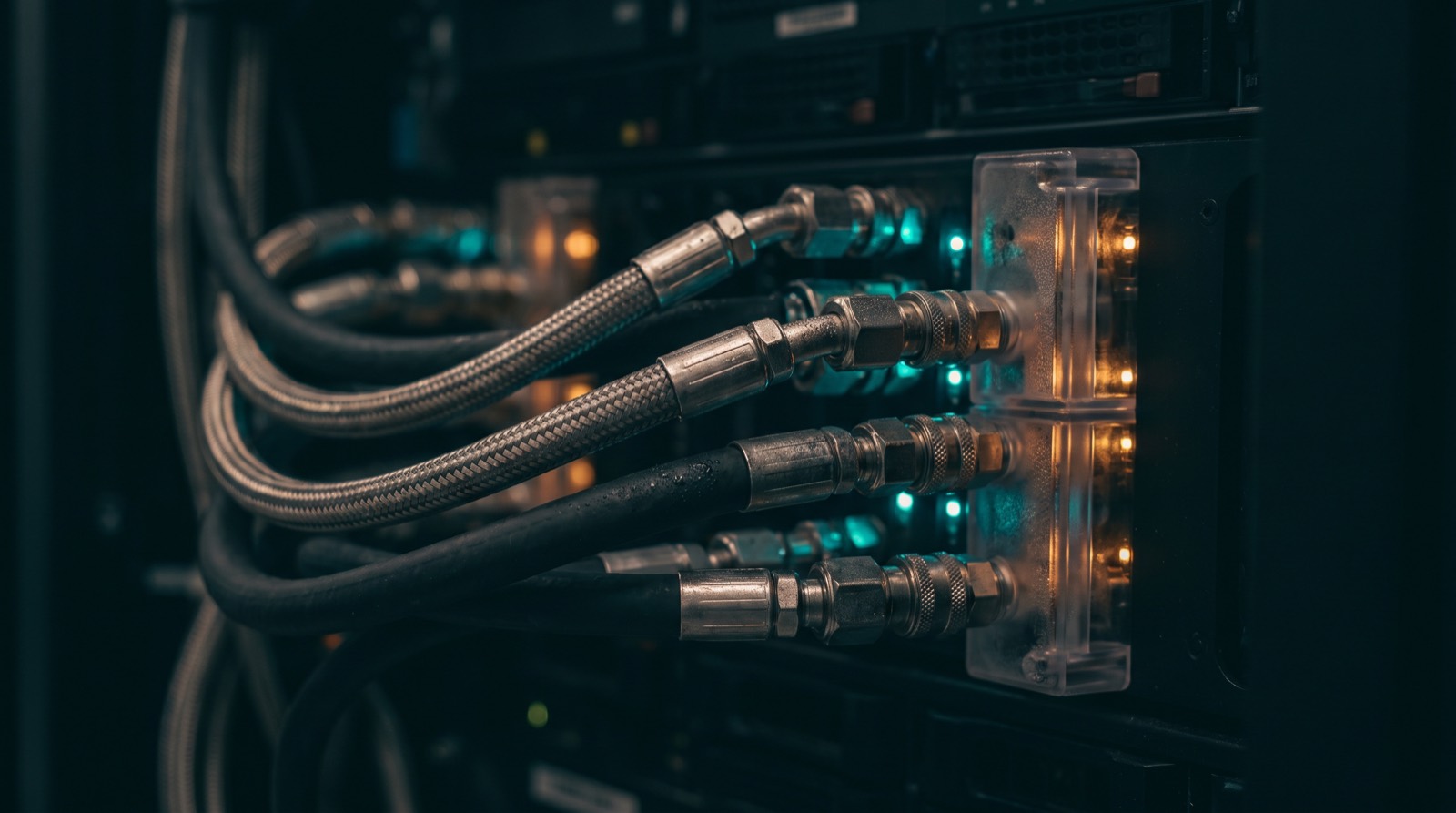
Evaporative cooling made big campuses river-and-lake creatures — Google's Council Bluffs sits by the Missouri; Data Center Alley grew along Virginia water and fiber. So "follow the water" long worked as a scouting rule. It is weakening: closed-loop liquid designs like Fairwater fill their loops once and sip thereafter, precisely because water optics became a community flashpoint. Where you still see big water rights being acquired, expect evaporative economics; where you see dry coolers on the renders, expect closed loops that traded water for a little more electricity.
3. Fiber — the quiet constraint
Campuses must sit on or near long-haul fiber backbones (and for multi-site training, on routes to their sibling campuses — Microsoft's AI WAN links its Fairwater sites). Old railroad and highway rights-of-way carry much of America's fiber, which is why data-center corridors often shadow them. Corning's fiber and Ciena's coherent optics are the layer that makes a remote gigawatt site usable.
4. Climate, land and the local bargain
Cool, dry climates give free cooling hours and better PUE; flat cheap land lets you build the next hall beside the last; and the political package — tax abatements, permitting speed, a utility willing to build generation (Entergy for Meta-style) — often decides between finalist sites. The counterweight is the new politics of load: who pays for grid upgrades, air permits for on-site turbines (Memphis), and rising retail rates.
The scout's checklist
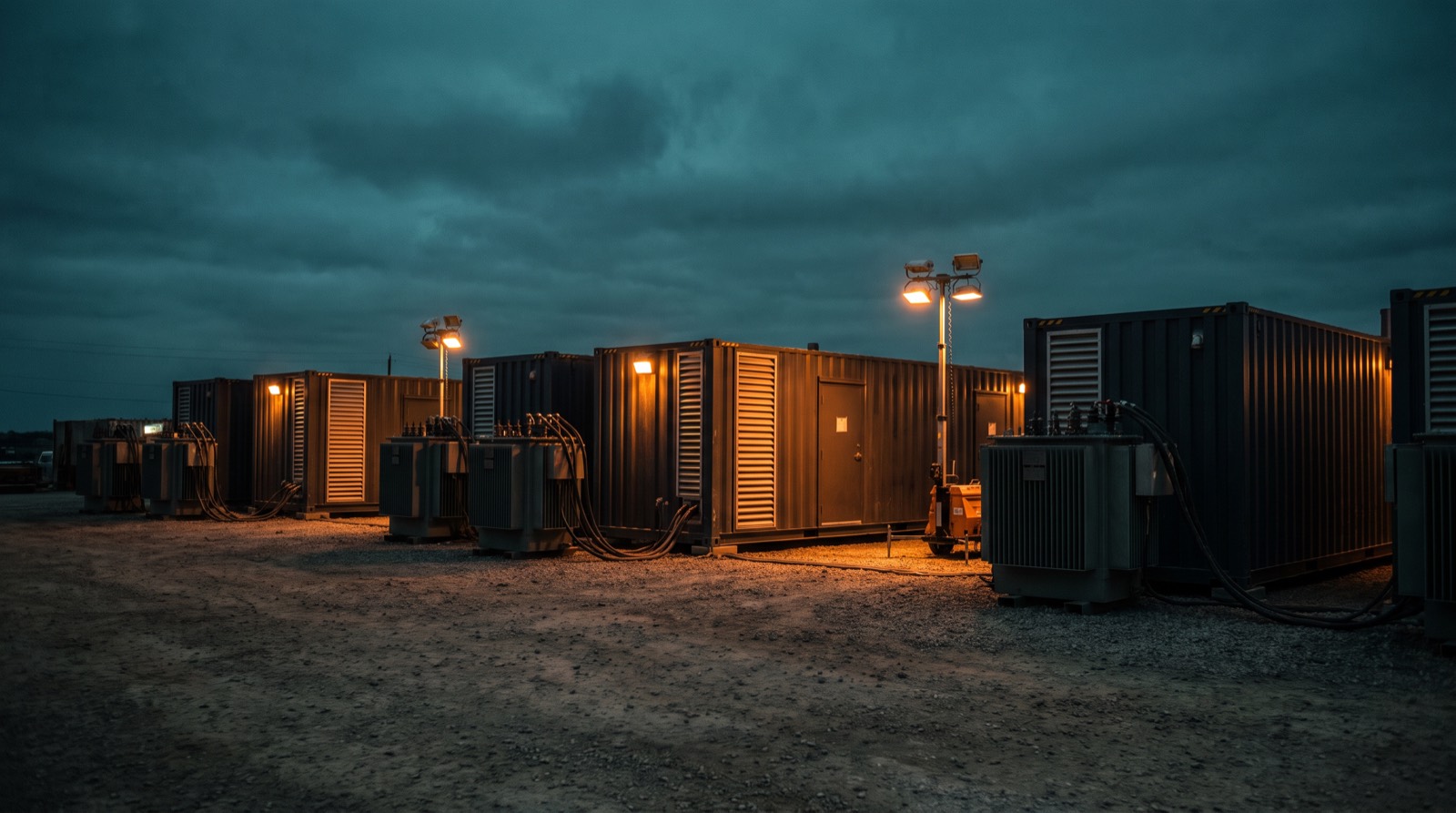
When a big land purchase makes local news, check: distance to a 345 kV line or substation; a water story (river rights or dry-cooler design); fiber routes; who the utility is and what they just asked regulators for; and any turbine or transformer orders reported nearby. Two or more of those tells together usually mean a campus — the records in our Data Centers and Power sections each list exactly these ingredients, so you can study the pattern on the real examples.